Antiperspirant before a mammogram and an MRI: what to know
Before a mammogram you are often asked to come without deodorant, and before an MRI to remove jewellery and make-up. Here is where these rules come from, what radiologists actually write about underarm products and how to prepare if you use an antiperspirant that is applied at night.
The short answer
On the day of a mammogram, nothing is applied to the underarms or breasts. RadiologyInfo, the patient guide of the American College of Radiology (ACR) and the Radiological Society of North America (RSNA), asks you not to wear deodorant, talcum powder or lotion under your arms or on your breasts, because on a mammogram they can appear as calcium spots and interfere with correct diagnosis. Antiperspirant goes on the same skin, so it makes sense to treat it the same way. RadiologyInfo's MRI guidance does not name antiperspirant, but it asks you to remove make-up and cosmetics that may contain metallic particles. The simplest approach is to arrive at either exam with freshly washed skin and follow your clinic's instructions.
Why product on the skin interferes with a mammogram
A mammogram is an X-ray of the breast, and it shows not only the tissue but also whatever is left on the skin. RadiologyInfo explains that deodorant, talcum powder or lotion under the arms or on the breasts can appear on the mammogram as calcium spots and interfere with correct diagnosis. So it is sensible to extend the rule to any product that stays on that skin, including antiperspirant, cream and powder.
How to prepare for a mammogram
RadiologyInfo's preparation advice is short. On the day of the exam, do not wear deodorant, talcum powder or lotion under your arms or on your breasts. Wear loose, comfortable clothing and leave jewellery at home; you may be asked to change into a gown. If your breasts are usually tender before your period, do not schedule the exam for that week; the best time is one week after your period ends. Tell your doctor or the X-ray technologist if there is any chance you are pregnant. Mention any prior surgeries, hormone use, and any personal or family history of breast cancer. If you have had mammograms elsewhere before, bring the previous images for comparison.
What is known about MRI
An MRI uses a strong magnetic field, so metal matters. RadiologyInfo's body MRI guide advises removing all jewellery, avoiding make-up and wearing loose, comfortable clothing; clothing with metallic fibres cannot be worn inside the scanner, and a gown is usually provided. The MRI safety section adds that make-up, nail polish and other cosmetics that may contain metallic particles should be removed. Eye shadow and eyeliner near the area being scanned can affect image quality, and items containing metal can heat up and cause burns. Antiperspirant is not mentioned separately in this guidance. So the solution is simple: if the clinic asks you to come without cosmetics, wash your underarms with soap and water and apply nothing, and be sure to tell the staff in advance about any implants or devices in your body.
If you apply antiperspirant at night
Strong products are applied in the evening and washed off in the morning, so the layer applied the night before may still be on the skin by the time of the exam. The most reliable option is not to apply the product on the evening before a mammogram, and in the morning to wash your underarms and breasts with soap and water and dry them thoroughly. If you did apply antiperspirant, wash it off thoroughly in the morning and tell the staff when you check in: the clinic will advise you what to do. After the exam you can return to your usual routine the same evening if the skin is calm.
Should antiperspirant worry you because of your breasts
The rule against applying products before a mammogram is about image quality only, not about harm to the breast. The US National Cancer Institute writes that there is no scientific evidence linking the use of antiperspirants and deodorants to the development of breast cancer; there are few studies, and their results conflict. More on what is known about aluminium in antiperspirants in the article "Antiperspirant during pregnancy: what is known".
When to see a doctor
A mammogram or an MRI is ordered by a doctor, and questions about preparation are best put to them or to the clinic. Do not wait for a scheduled screening if you notice changes. The NHS advises seeing a doctor if you have a lump or swelling in your breast, chest or armpit, if your breasts or nipples change in a way that is not normal for you, or if you have breast or armpit pain and close relatives have had breast or ovarian cancer. Redness and a rash in the underarms from an antiperspirant are also a reason to see a doctor if they do not clear up after you stop using the product.
OKEY: apply in advance, wash off in the morning
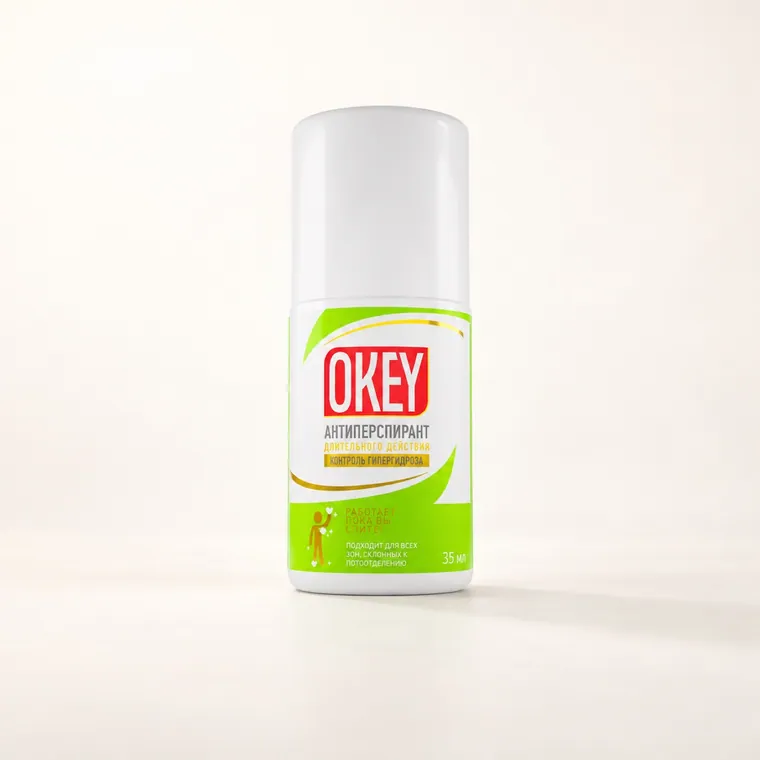
OKEY is a product of the team that owns this website. It is applied in the evening, 2–3 strokes of the roller on clean, completely dry and intact skin, and washed off in the morning with water and mild soap. According to the instructions, washing removes the residue from the skin surface without reducing the protective effect that has formed, and the stated effect lasts up to 72 hours. So before a mammogram it is convenient to apply OKEY one or two evenings before the exam, apply nothing on the evening right before it, and simply wash your underarms in the morning. If the clinic has given you other instructions, follow them. OKEY contains no alcohol or fragrance, but has six care ingredients: aloe vera, panthenol, hyaluronic acid, chamomile extract, allantoin and glycerin; its active ingredient is aluminum chloride. The 35 ml roll-on suits women and men and is for the underarms, palms, feet and other areas prone to excessive sweating. OKEY costs 7990 ₸ on Kaspi, and the bottle can be returned within 14 days.
Sources
- RadiologyInfo (ACR/RSNA): mammography — do not wear deodorant, talcum powder or lotion under arms or on breasts; preparation (reviewed 04.02.2025)
- RadiologyInfo (ACR/RSNA): body MRI — remove jewelry, avoid makeup, metallic fibers in clothing (reviewed 15.06.2026)
- RadiologyInfo (ACR/RSNA): MRI safety — cosmetics that may contain metallic particles, heating and burns, implants (reviewed 22.12.2025)
- National Cancer Institute: antiperspirants/deodorants and breast cancer
- NHS: breast cancer symptoms — lump or swelling in breast, chest or armpit; when to see a GP
- Official OKEY instructions: evening application, morning wash-off, effect persists after washing
Try OKEY
A 35 ml roll-on with aluminium chloride, free of alcohol and fragrance, for women and men. Applied in the evening, with a claimed duration of up to 72 hours. The bottle can be returned within 14 days.