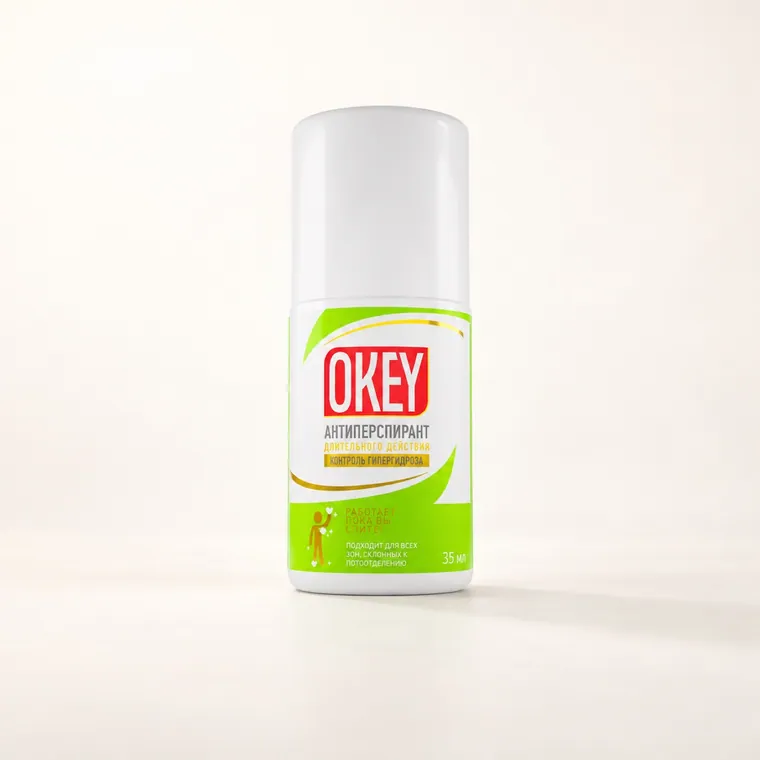
Parabens in antiperspirant: why they are used and what is known
"Paraben-free" has become a familiar label on the deodorant shelf, and many people see parabens as the main thing to check in an ingredient list. Here is what these substances are, how the European Union restricts them, what the FDA and the US National Cancer Institute say, and how to read a label without needless worry.
The short answer
Parabens are preservatives: they protect a product from bacteria and mould, but they do not affect sweat or odour. In the EU, methyl- and ethylparaben are allowed up to 0.4% each and up to 0.8% in a mixture; propyl- and butylparaben are allowed at no more than 0.14% combined and not in leave-on products for the nappy area of children under three; five other parabens have been banned since 2014. The FDA writes that it has no information showing that parabens in cosmetics affect human health. The US National Cancer Institute sees no evidence that they cause breast cancer and notes that most US deodorants and antiperspirants currently do not contain them. Dropping parabens does not make a product gentler by itself: a formula that touches the skin still needs protection against microbes, usually from another preservative.
What parabens are and why they are needed
The FDA describes parabens as a family of related chemicals used as preservatives, mainly against harmful bacteria and mould. The most common are methylparaben, propylparaben, butylparaben and ethylparaben; a product often contains several of them, frequently together with other preservatives. Why does an antiperspirant need a preservative? A roll-on or a stick touches the skin at every use and picks up microorganisms from it. The FDA writes that they need to be kept under control, for example by preservatives. Parabens do not reduce sweat or fight odour: the aluminum salt is responsible for sweat, and the preservative simply keeps the formula usable until the end of its shelf life.
How the EU restricts them
In the EU, only preservatives listed in Annex V of Regulation 1223/2009 are allowed, and parabens have separate entries there. Methylparaben and Ethylparaben with their salts are allowed up to 0.4% as acid for a single ester and up to 0.8% for a mixture of esters. Regulation 358/2014 records the conclusion of the SCCS scientific committee: methyl- and ethylparaben are safe at the maximum authorised concentrations. For Propylparaben and Butylparaben, Regulation 1004/2014 introduced a stricter limit: no more than 0.14% as acid combined. They were also banned in leave-on products designed for the nappy area of children under three, and leave-on products for children must carry the warning "do not use on the nappy area". The new rules apply from 16 April 2015. Five parabens — Isopropylparaben, Isobutylparaben, Phenylparaben, Benzylparaben and Pentylparaben — were moved by Regulation 358/2014 to the list of prohibited substances: industry did not submit data that would allow their safety to be assessed. From 30 October 2014, only products without them may be placed on the EU market.
Why parabens are linked to breast cancer
The concern arose because parabens weakly mimic the action of oestrogen in cells, and oestrogen can promote the growth of breast cancer cells. The US National Cancer Institute notes that parabens have been found in breast tumour tissue, but there is no evidence that they cause breast cancer. Overall, the institute writes that there is no scientific evidence linking the use of antiperspirants and deodorants to breast cancer; there are few studies and their results conflict. The FDA continues to review published studies on paraben safety and writes that it does not have information showing that parabens as used in cosmetics have an effect on human health. If such data appear, the agency says it will take action.
How to find parabens in an ingredient list
Parabens are easy to recognise by the ending -paraben: Methylparaben, Ethylparaben, Propylparaben, Butylparaben, as well as their salts, such as Sodium Methylparaben. The FDA notes that ingredients on the pack are listed by their common or usual names, so parabens are usually easy to spot. If a product for the EU market lists Isopropylparaben, Isobutylparaben, Phenylparaben, Benzylparaben or Pentylparaben, that is a reason for caution: they are banned in the EU. Do not confuse parabens with Phenoxyethanol: it is a preservative of a different class. More on reading the whole ingredient list in the article "How to read an antiperspirant ingredient list".
Who should avoid parabens
The American Academy of Dermatology (AAD) advises people with hidradenitis suppurativa to look for an antiperspirant or deodorant that does not contain alcohol, baking soda, parabens, dyes or fragrance. If a dermatologist has found a paraben allergy on patch testing, you should avoid them too. For everyone else, the absence of parabens is not the main criterion. A "paraben-free" label says nothing about alcohol, fragrance or the strength of the active, and the preservative that replaces them can also cause an individual reaction. If your skin reacts to an antiperspirant, it is better to find the cause with a doctor than by one line on the pack.
OKEY: what has been published about the formula
OKEY is a product of the team that owns this website. The official website okeystaydry.com states: the active ingredient is aluminum chloride, there is no alcohol or fragrance, and there are six care ingredients: aloe vera, panthenol, hyaluronic acid, chamomile extract, allantoin and glycerin. The full INCI list is not given on the website, but it can be requested from the OKEY team through the official site. The product is applied in the evening, 2–3 strokes of the roller on clean, completely dry and intact skin, and washed off in the morning; the stated effect lasts up to 72 hours, then 1–2 times a week or as needed. After hair removal or shaving, wait up to 48 hours. The 35 ml roll-on suits women and men and is for the underarms, palms, feet and other areas prone to excessive sweating. OKEY costs 7990 ₸ on Kaspi, and the bottle can be returned within 14 days.
Sources
- FDA: parabens in cosmetics (content current as of 18.11.2025)
- Commission Regulation (EU) No 358/2014: five parabens prohibited, SCCS on methyl- and ethylparaben, dates
- Commission Regulation (EU) No 1004/2014: propyl- and butylparaben 0.14%, nappy area of children under three, entry 12 limits
- Regulation (EC) No 1223/2009, Annex V: permitted preservatives
- National Cancer Institute: antiperspirants/deodorants and breast cancer — parabens
- FDA: shelf life and expiration dating of cosmetics — microorganisms controlled by preservatives
- American Academy of Dermatology: hidradenitis suppurativa self-care — antiperspirant without alcohol, baking soda, parabens, dyes, fragrance
- Official OKEY website: six care ingredients, alcohol- and fragrance-free; full INCI on request
Try OKEY
A 35 ml roll-on with aluminium chloride, free of alcohol and fragrance, for women and men. Applied in the evening, with a claimed duration of up to 72 hours. The bottle can be returned within 14 days.