White and yellow marks on clothes: which forms leave fewer
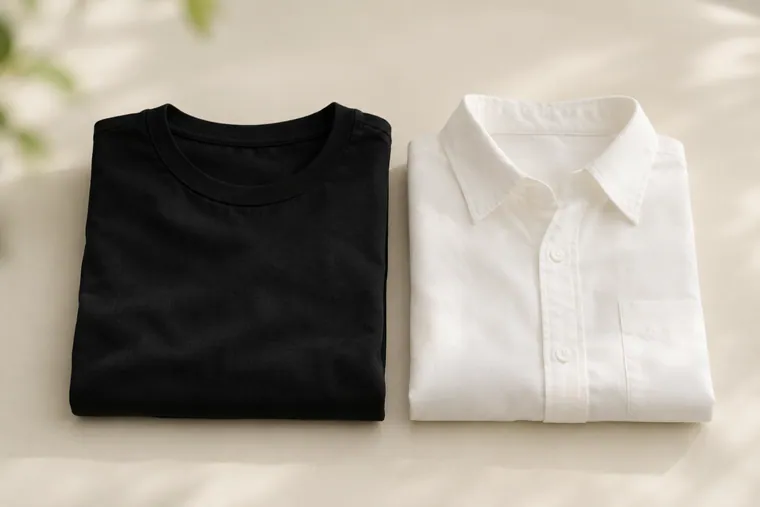
White streaks on a black T-shirt and yellowish patches on a white shirt look like one problem, but they have different causes. A white mark is residue of the product itself; a yellow one builds up gradually where the fabric meets both sweat and antiperspirant. We look at which forms leave marks more often and what actually helps protect your clothes.
Two different marks
White marks show up straight away: the product transfers to the fabric when you dress or move, and an opaque base stands out on dark clothes. Yellow patches appear over time, more often on light fabric in the underarm area, and build up from wear to wear. They are linked to the fabric regularly coming into contact with both sweat and antiperspirant ingredients. Cleveland Clinic warns directly that aluminium chloride solutions may discolour fabrics and harm certain metals, and advises avoiding contact with clothing and jewellery. This is not about one form: any antiperspirant with an aluminium salt can leave a mark once it gets onto fabric.
Which forms leave white marks
Most often, solid sticks and creams: their base of waxes, oils and powders is opaque and shows on dark fabric. An aerosol sprays powdered active salt in an oily base: if you hold the can too close or spray for too long, a white film stays on the skin and clothes. Liquid roll-ons, clear gels and solutions are usually almost invisible once fully dry. The key condition is drying completely: a damp layer of any form transfers easily to fabric.
Where yellow patches come from
Yellow patches don’t depend on how white the product looks. What matters is how much product is on the skin, how much of it transfers to the fabric, how much a person sweats and how often the garment is washed. So choosing a clear form doesn’t guarantee that light shirts stay clean. If the product is applied in a thick layer and you dress straight away, the fabric absorbs both the product and the sweat, and over time the underarm area turns yellow.
Comparing forms by marks
Roll-on and liquid solution: a thin layer, almost invisible once dry, but you shouldn’t dress over damp skin. Clear gel: leaves no white film, but because of water and often alcohol it also needs to dry. Solid stick: the quickest to apply and the most likely to whiten dark fabric, unless it is a clear formula. Aerosol: dries quickly but leaves a powdery film if sprayed incorrectly. Cream: the dose is hard to repeat, and any excess transfers easily to clothes. We covered other criteria for choosing a form — dose, skin and travel — in the article “How to choose an antiperspirant: roll-on, stick, spray, cream”.
How to protect your clothes
Apply a thin layer: the number of strokes or sprays is given in the instructions, and more doesn’t mean more reliable. Let the product dry completely before you dress: the AAD advises letting antiperspirant dry completely. If the product is applied overnight, sleep in an old or dark T-shirt and wash the residue off your skin in the morning before putting on work clothes. Don’t put off washing garments that have absorbed sweat and antiperspirant. And above all, less sweat in the underarms means fewer damp patches on the fabric.
When it’s not the antiperspirant
If sweat itself stains your clothes — even on days when you haven’t used antiperspirant — it is worth seeing a dermatologist. DermNet describes chromhidrosis, a rare condition in which sweat is discoloured. It is also worth seeing a doctor about heavy sweating that gets in the way of daily life: see our article “When increased sweating is a reason to see a doctor”.
OKEY: applied at night, washed off in the morning
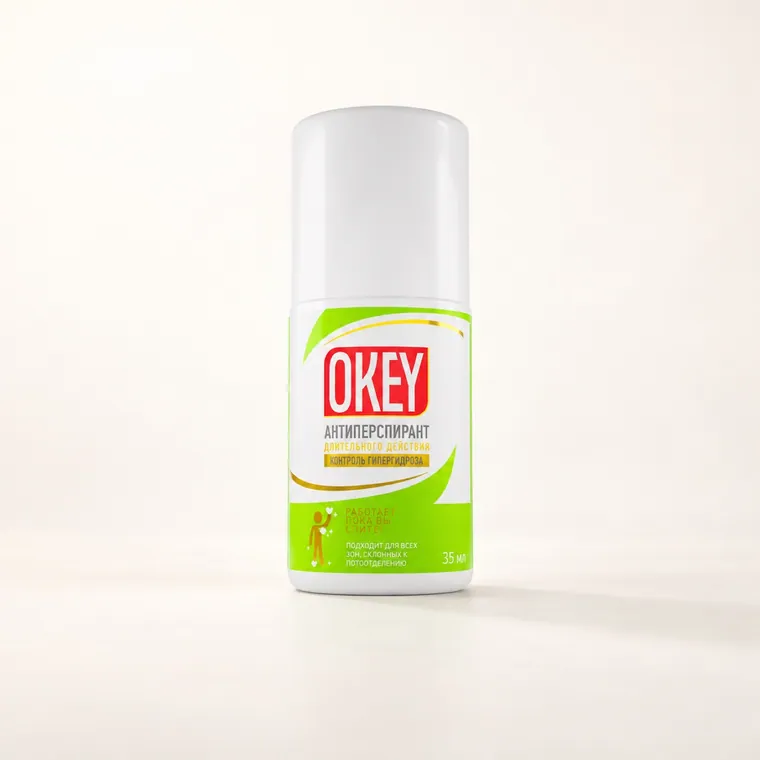
OKEY is made by the team that owns this site. It is a 35 ml liquid roll-on for women and men with aluminium chloride in a water base, without alcohol and without fragrance. It is applied in the evening to clean, completely dry, unbroken skin, left on overnight and washed off in the morning. The ball applies a thin layer and lets you put the product precisely on the underarm area. Aluminium chloride, like other aluminium salts, can discolour fabric, so until you wash it off, let your skin touch a sleep T-shirt you don’t mind. In the morning, after washing, you dress without a fresh layer of product on your skin, and the claimed duration is up to 72 hours, so there is no need to reapply during the day. You can try OKEY via the official site okeystaydry.com or the Kaspi link below; if the product doesn’t suit you, the bottle can be returned within 14 days.
Sources
Try OKEY
A 35 ml roll-on with aluminium chloride, free of alcohol and fragrance, for women and men. Applied in the evening, with a claimed duration of up to 72 hours. The bottle can be returned within 14 days.